NAD+ identity, formulation and exposure: three separate evidence questions
Related molecules are not interchangeable preparations
NAD+ stands for nicotinamide adenine dinucleotide in its oxidised form. NADH is its reduced counterpart. Their interconversion supports redox reactions in metabolism, while NAD+ also serves as a substrate for enzymes with functions beyond energy metabolism. NAD+ is a coenzyme, not a peptide.
Nicotinamide riboside, abbreviated NR, and nicotinamide mononucleotide, or NMN, are different molecules involved in pathways that produce NAD+. This biochemical connection is sometimes used to group all three under a single intervention label. For evidence assessment, that grouping is too broad: administering a precursor and administering the finished coenzyme are not the same experiment.
What the precursor evidence actually establishes
Consider a randomised pilot published online in 2023. Twenty older adults with mild cognitive impairment were studied over 10 weeks using oral NR, not direct NAD+. Blood NAD+ increased approximately 2.6-fold, but cognitive improvement was not demonstrated. Original NR study.
The result supports a specific link between that precursor intervention and the measured blood biomarker. It does not establish that intact NAD+ crossed a particular tissue barrier, reached brain cells or produced a clinical effect. A rise in the downstream coenzyme after precursor administration cannot supply missing pharmacokinetic evidence for a different preparation.
A July 2026 phase-II NR pilot likewise found an approximately twofold blood NAD+ increase over 12 weeks among 42 completers. Its primary cognitive outcome, total cerebral blood flow and blood pressure did not improve. Exploratory regional brain observations do not establish a cognitive benefit. 2026 study. Neither trial validates a direct NAD+ delivery system.
Identity and content come before delivery claims
For a direct NAD+ formulation, the first question is what the preparation actually contains. A label identifies the intended ingredient; analytical evidence is needed to establish identity and quantify content in the tested sample. NAD+ and NADH are chemically related but distinct forms, so a method must be capable of addressing the relevant identity question.
A chromatographic area percentage is not automatically the proportion of the container’s total mass that is NAD+. It depends on the method, detector response and which components are detected. Nor does that percentage alone establish identity, absolute content, sterility or endotoxin status. These are different measurements, not interchangeable meanings of “purity.”
A container cannot supply missing biological evidence
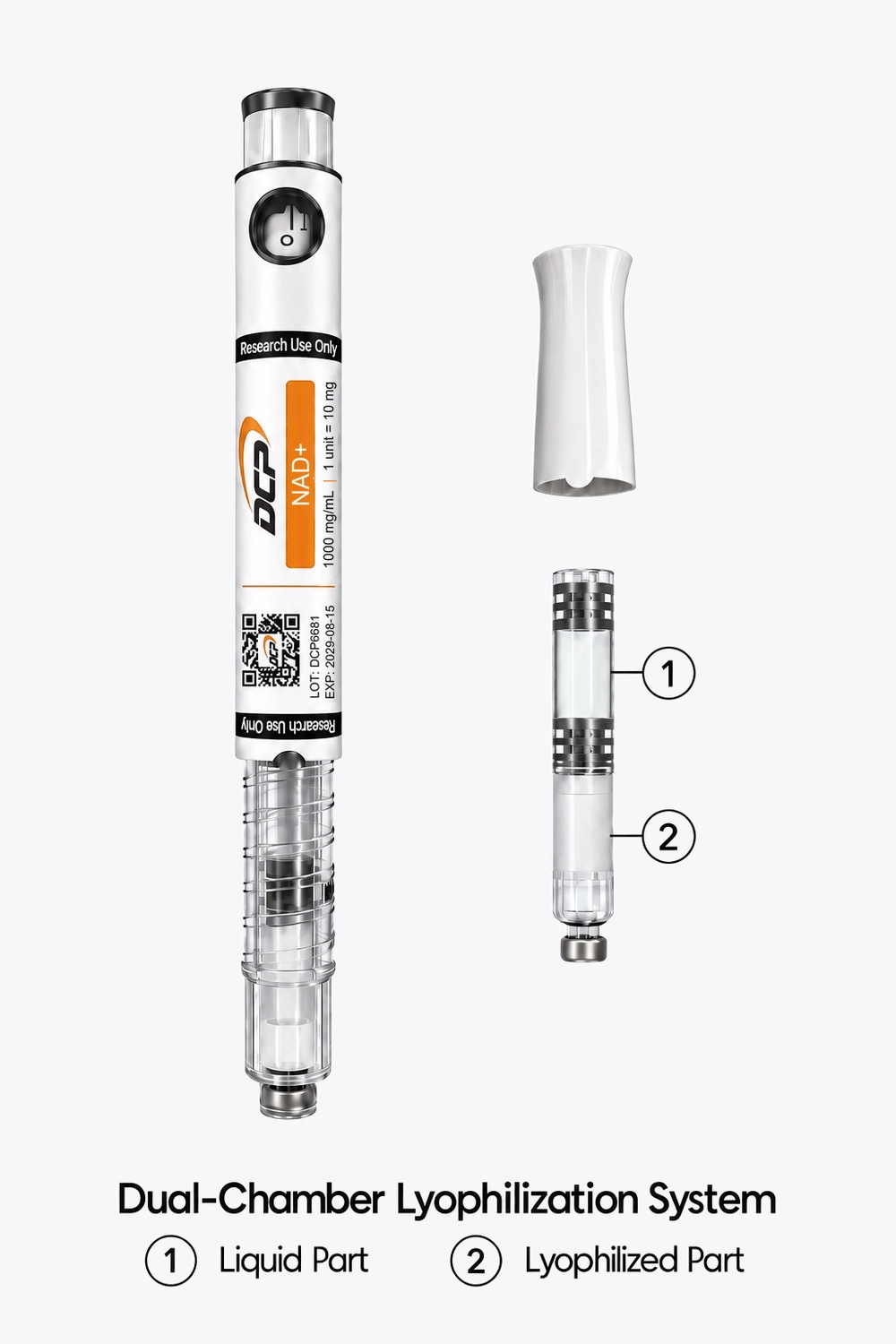
Formulation assessment asks whether the intended compound remains measurable in its vehicle and container over defined conditions and time points. A stability claim therefore needs product-specific analytical data, including methods able to distinguish the intended substance from relevant changes or degradation products. Packaging appearance or compartment separation alone cannot establish a shelf life.
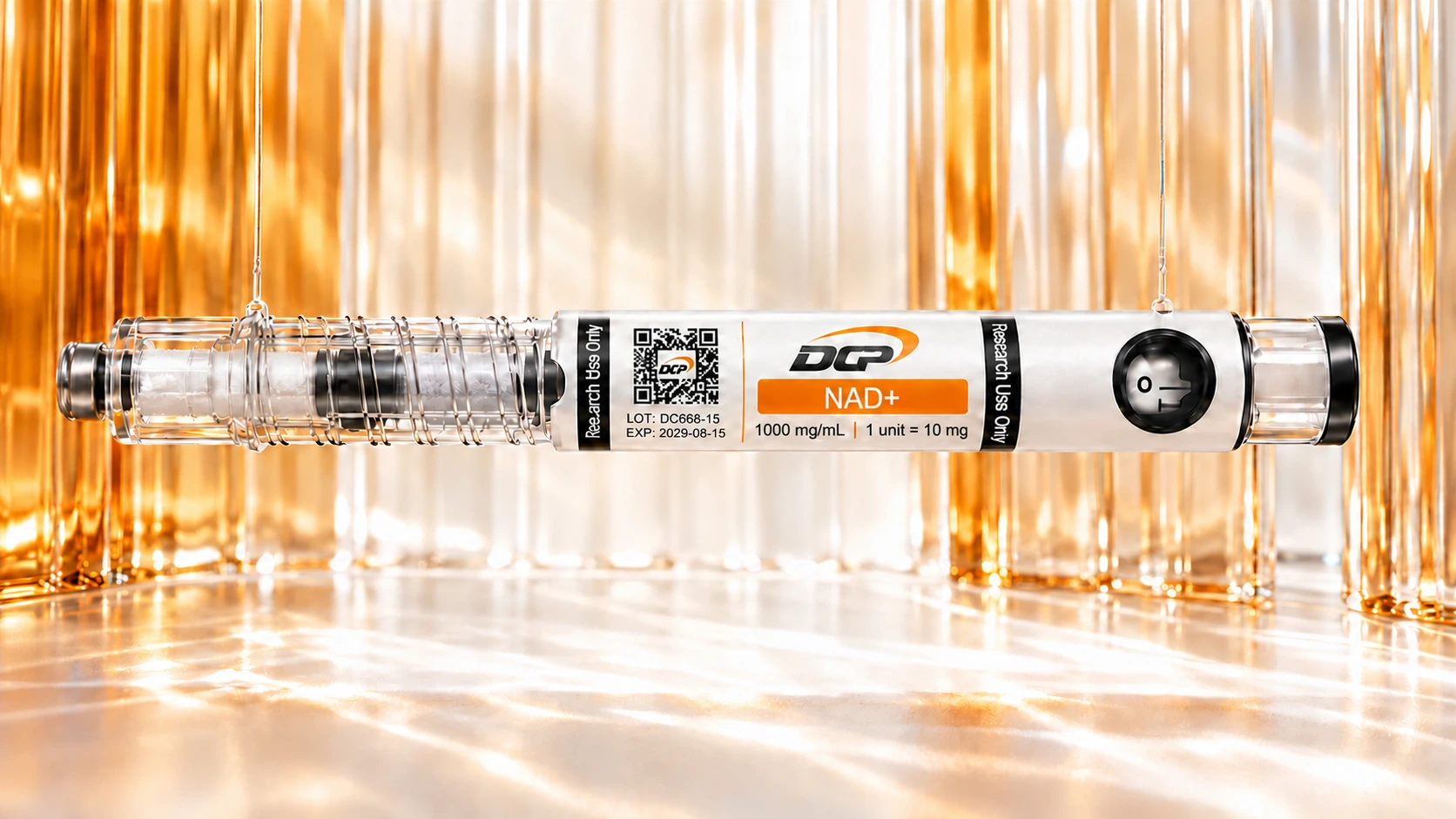
Delivery raises a further question: what reaches the body, and in what chemical form? The amount present in a preparation, the amount delivered and the amount reaching a target tissue are separate quantities. A cartridge or vial format cannot demonstrate absorption, cellular uptake or clinical efficacy by itself.
These distinctions leave a clear evidentiary boundary. The cited studies show that oral NR can raise blood NAD+ under their study conditions without demonstrated cognitive improvement. Claims for direct NAD+ require their own identity, formulation, exposure and outcome evidence—not a transfer of conclusions from the precursor literature.
Explore the Products from This Article
All products are >99% purity, manufactured in a certified EU laboratory, with accompanying lab analysis.
Research Disclaimer
This article is for informational and research purposes only. The content is not intended as medical advice, diagnosis, or treatment recommendation.