BPC-157: Molecular Findings Are Not Delivery-System Evidence
Three claims that should not be bundled together
A BPC-157 discussion can contain three distinct propositions: the peptide has an effect in an experimental model, a preparation contains the intended material, and a delivery system produces a defined exposure. Evidence for one does not automatically support the others.
BPC-157 is a synthetic pentadecapeptide, meaning a chain of 15 amino acids. That definition says nothing by itself about the composition of a particular batch, the behaviour of a formulated preparation or a clinical outcome. Those questions require evidence matched to the material and setting being discussed.
A cellular finding, with a clear boundary
One primary investigation studied Achilles tendon fibroblasts cultured from male Sprague-Dawley rats. Researchers measured growth hormone receptor messenger RNA and protein, proliferation-related responses and JAK2 signalling associated with growth hormone stimulation.
The reported increase in receptor expression and changes in cellular responsiveness provide a mechanistic lead. They do not establish human tendon repair or a systemic growth hormone effect. Importantly for formulation questions, the cells encountered the experimental material directly in culture. The experiment did not test whether a finished product could deliver an equivalent exposure to a tendon in a living person.
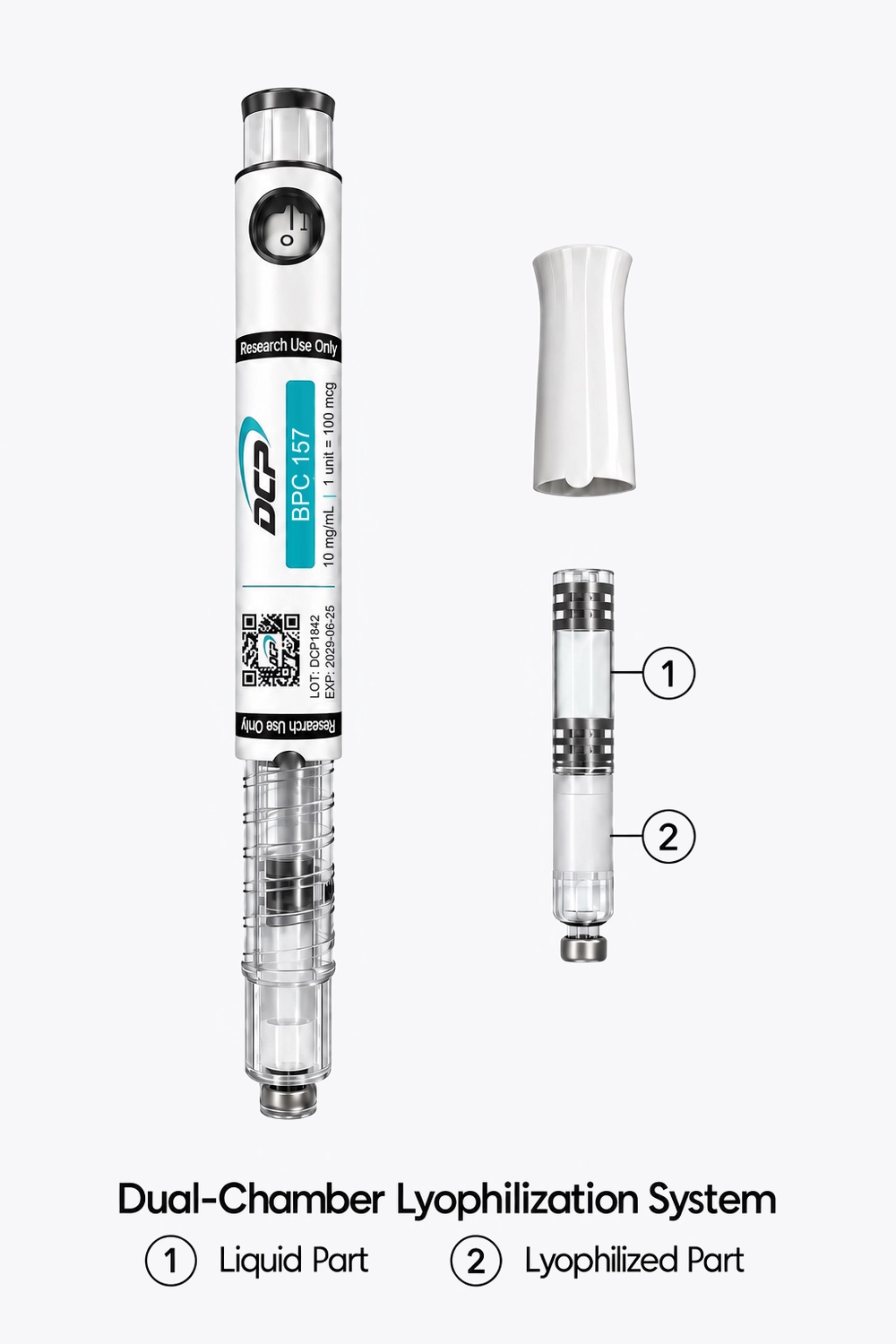
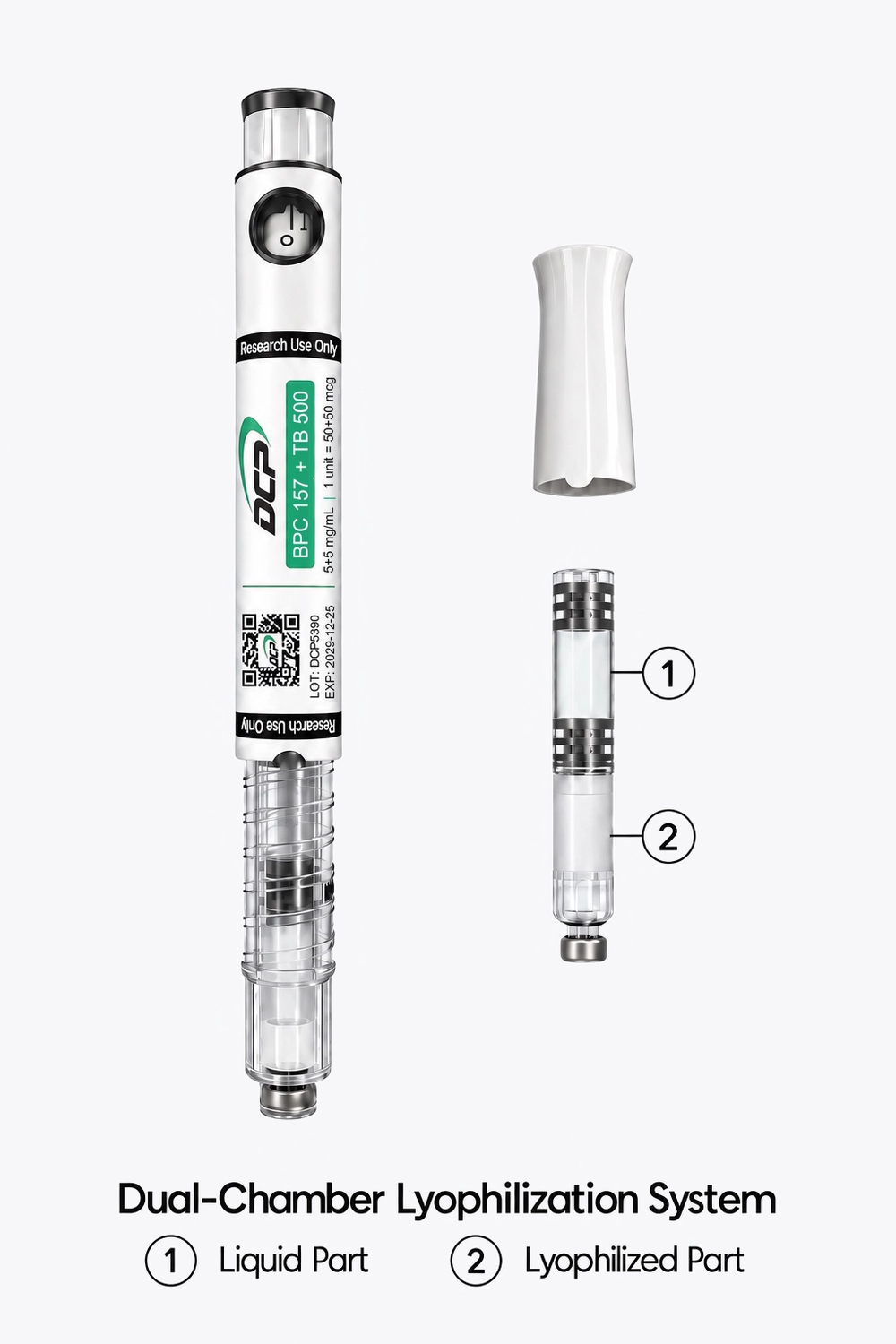
This missing exposure bridge cannot be supplied by the appearance of a container or by a description of how a device operates.
Identity is not the same as a purity percentage
Before translating a literature finding to another preparation, the material needs appropriate chemical characterisation. A peptide name on a label is a claim of identity, not an analytical demonstration. Methods that address molecular identity, quantity and impurities answer different questions and may need to be used together.
Chromatographic area percentage is particularly easy to overinterpret. It describes the relative detector response assigned to peaks under a particular method. It is not automatically peptide mass percentage, vial content or proof of molecular identity. Nor does it establish sterility or endotoxin status. The distinction is explained further in HPLC purity testing.
A well-characterised sample makes an experiment more interpretable. It does not convert a preclinical observation into evidence of therapeutic benefit.
Formulation and delivery need their own measurements
A vehicle, container and closure system can affect a preparation's behaviour. Relevant questions include whether material remains in solution, whether it interacts with contact surfaces and whether its measured composition changes over time. These are properties to investigate in the actual formulation and packaging, not benefits to infer from a device category.
Similarly, nominal content, recovered output and biological exposure are separate quantities. An output measurement may describe what leaves a device under specified test conditions; it does not show how much reaches the circulation or target tissue. Storage claims require product-specific stability evidence rather than assumptions about peptides in general.
No cartridge arrangement can establish a BPC-157 healing effect merely by separating components before use. Device performance and biological efficacy remain separate evidence questions.
What a responsible conclusion can say
The FDA assessment of substances used in compounding identifies BPC-157 safety concerns and insufficient information. This is regulatory context, not a study of a particular delivery system or proof of a clinical outcome.
The appropriate conclusion is therefore specific: BPC-157 has findings in cultured rat tendon cells that warrant mechanistic interpretation. Any claim about a finished preparation additionally needs matching identity, formulation and delivery evidence—and none of those measurements substitutes for human efficacy and safety data.
Explore the Products from This Article
All products are >99% purity, manufactured in a certified EU laboratory, with accompanying lab analysis.
Research Disclaimer
This article is for informational and research purposes only. The content is not intended as medical advice, diagnosis, or treatment recommendation.