CJC-1295 and Ipamorelin: Identity and Delivery Before Blend Claims
A shared display does not define a formulation
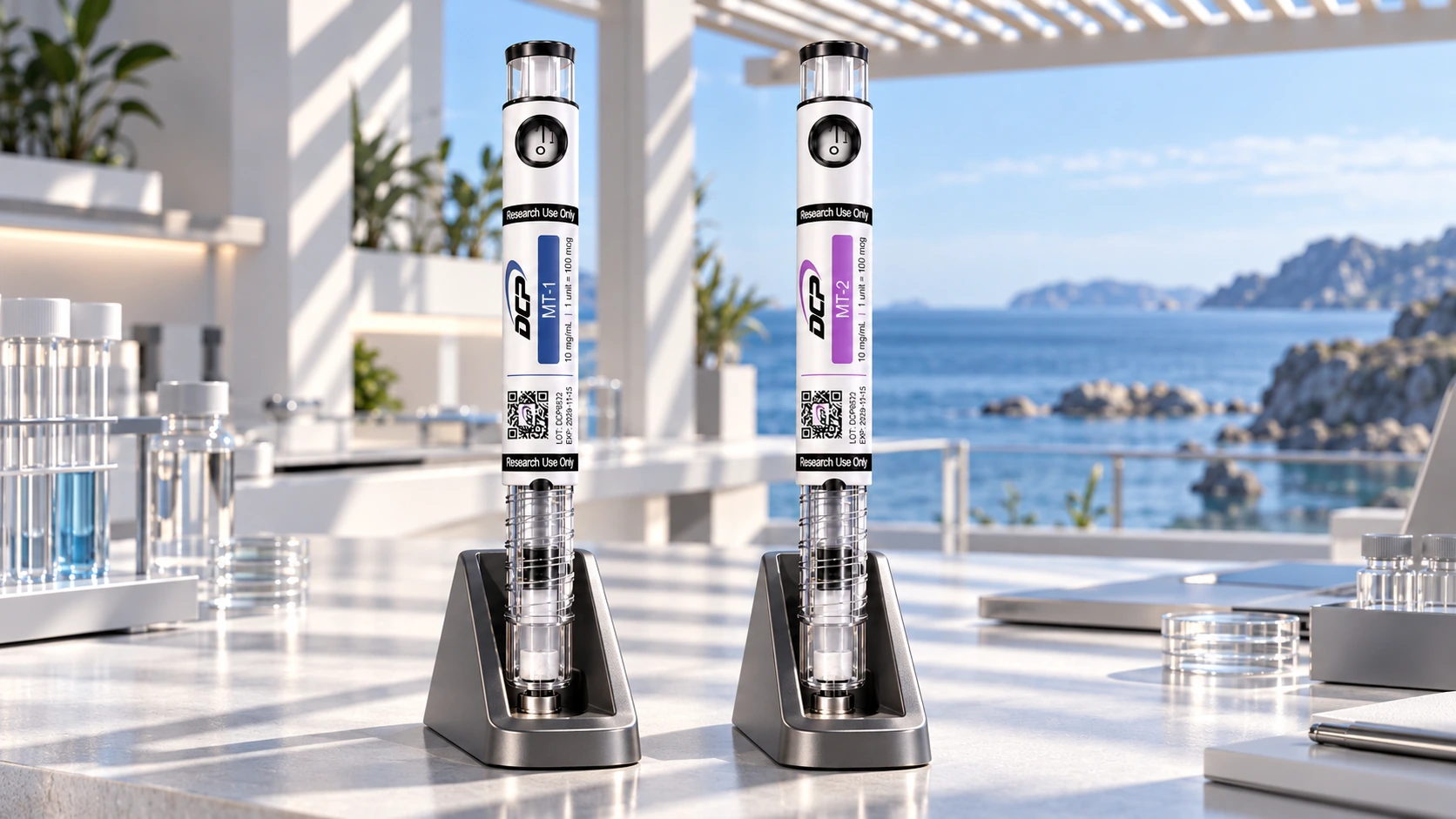
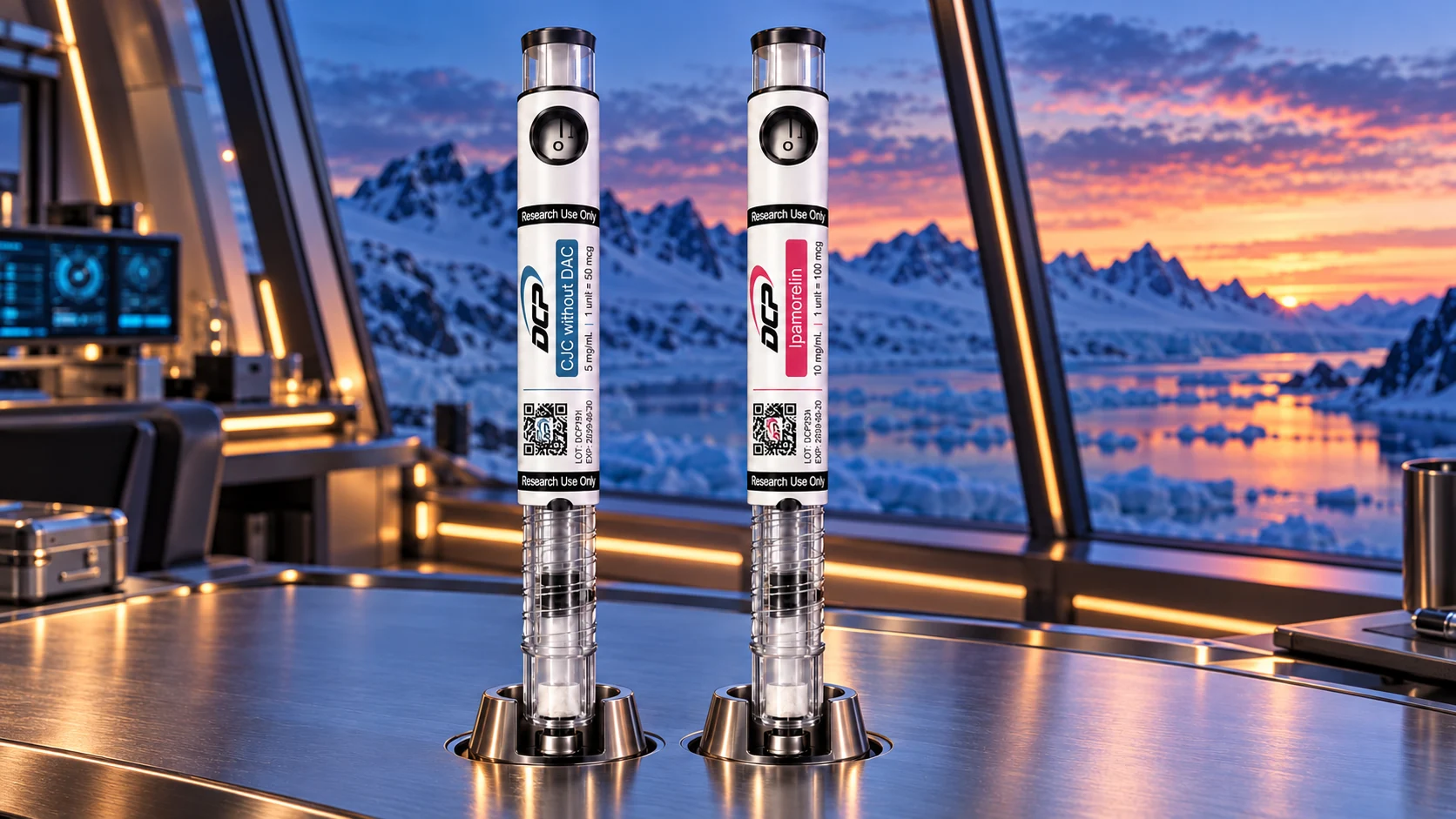
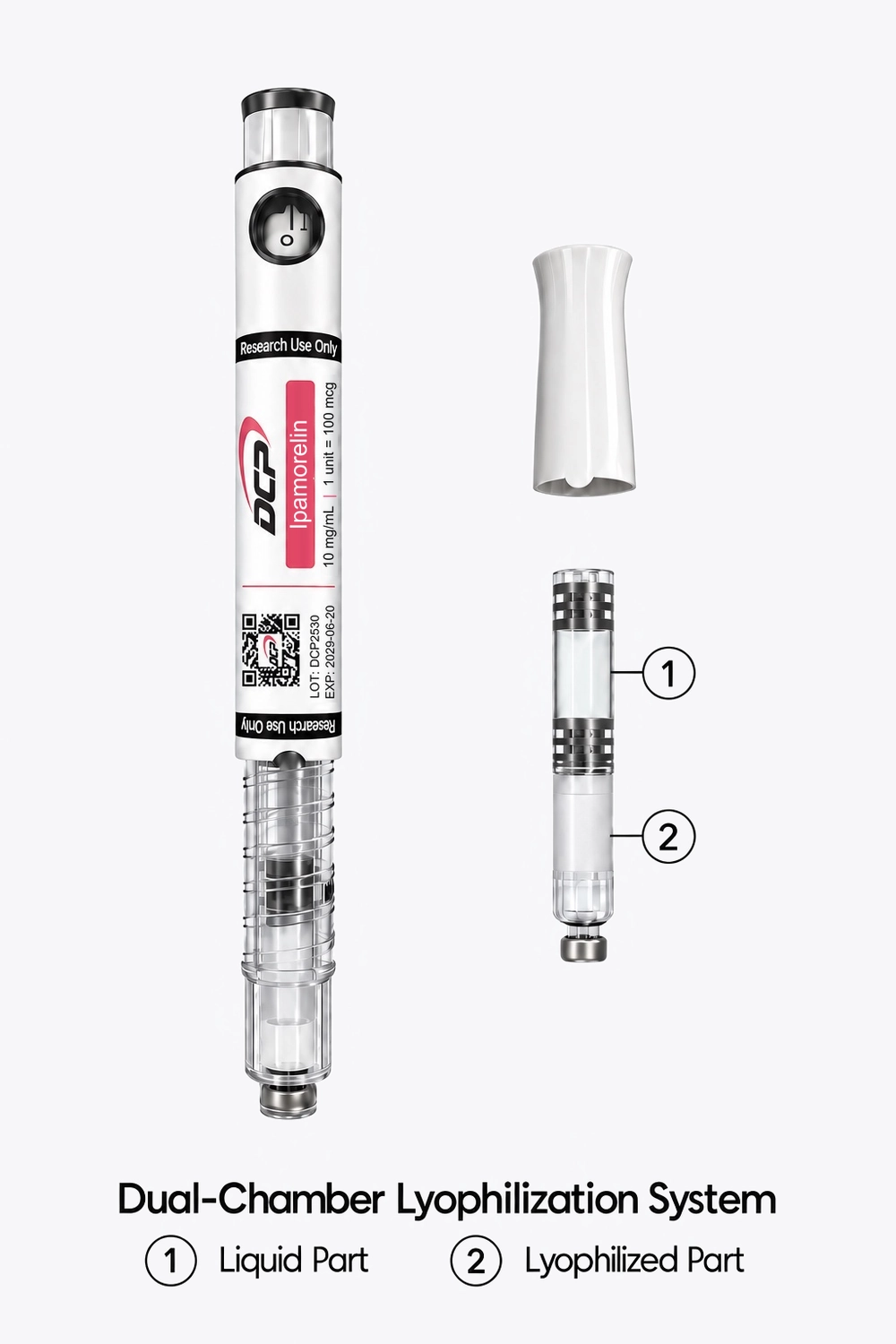
Presenting CJC-1295 and ipamorelin together does not establish that they are premixed, chemically compatible or clinically studied as a pair. Separate-device information describes the material assigned to each presentation. A combined-formulation claim requires documentation of the actual mixture.
Three details therefore need to remain distinct: the identity of each molecule, the formulation containing it and the route by which exposure was studied. A device description cannot supply missing evidence in any of those categories. This is particularly important for CJC-1295, where similar names are used for chemically different preparations.
Albumin binding belongs to the molecule, not the container
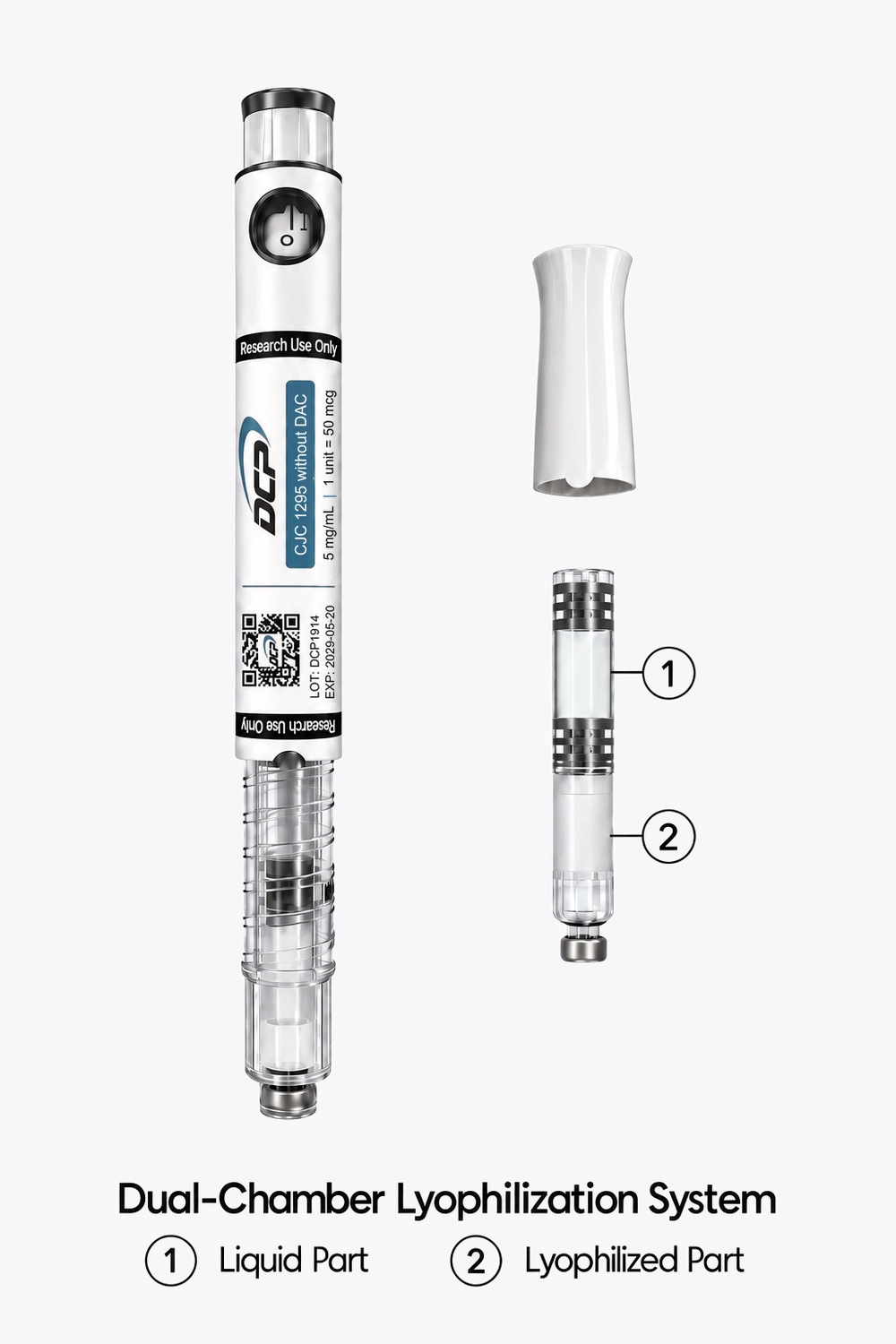
Long-acting CJC-1295 incorporates an albumin-binding modification known as DAC. Preparations labelled “no DAC” commonly refer to modified GRF(1–29), without that modification. The exact sequence and modifications should be documented rather than inferred from the abbreviated name.
In Teichman and colleagues' human study, the intervention was the long-acting, albumin-binding compound administered subcutaneously to healthy adults aged 21–61. Its estimated half-life was 5.8–8.1 days. Neither a different container nor a similar product name makes that estimate applicable to a no-DAC preparation.
Long persistence also does not mean that GH secretion became non-pulsatile. A separate study in healthy men aged 20–40 found that pulses persisted, with unchanged frequency and magnitude but increased trough and mean GH levels. That result concerns the hormonal response to the studied DAC molecule, not a property conferred by a delivery device.
What intravenous ipamorelin research can establish
The human ipamorelin pharmacology study offers a useful example of why route matters. Healthy men received a 15-minute intravenous infusion, and investigators assessed ipamorelin pharmacokinetics and circulating GH. The study connected a defined intervention with drug exposure and a hormone response.
Intravenous administration introduces the compound directly into the circulation. Other routes introduce an absorption step, potentially changing the timing and amount reaching the blood. The infusion study therefore cannot establish the exposure profile of a subcutaneous preparation, much less the performance of a particular device or premixed formulation.
Its GH measurements also answer a narrower question than tissue repair or improved physical function. Detecting a hormonal response shows pharmacological activity under the study conditions; it does not establish those downstream outcomes.
Ipamorelin's selectivity should be read with similar care. The often-cited preclinical study used rat pituitary cells, rats and swine to examine hormone responses. It is not evidence that every human formulation leaves cortisol, prolactin or appetite unaffected.
Compatibility is a separate evidence question
CJC-related GHRH analogues and ipamorelin act through the GHRH and ghrelin-receptor pathways respectively. That receptor-level distinction supports investigating a combination, but says nothing by itself about whether both compounds remain intact together in a particular vehicle or container.
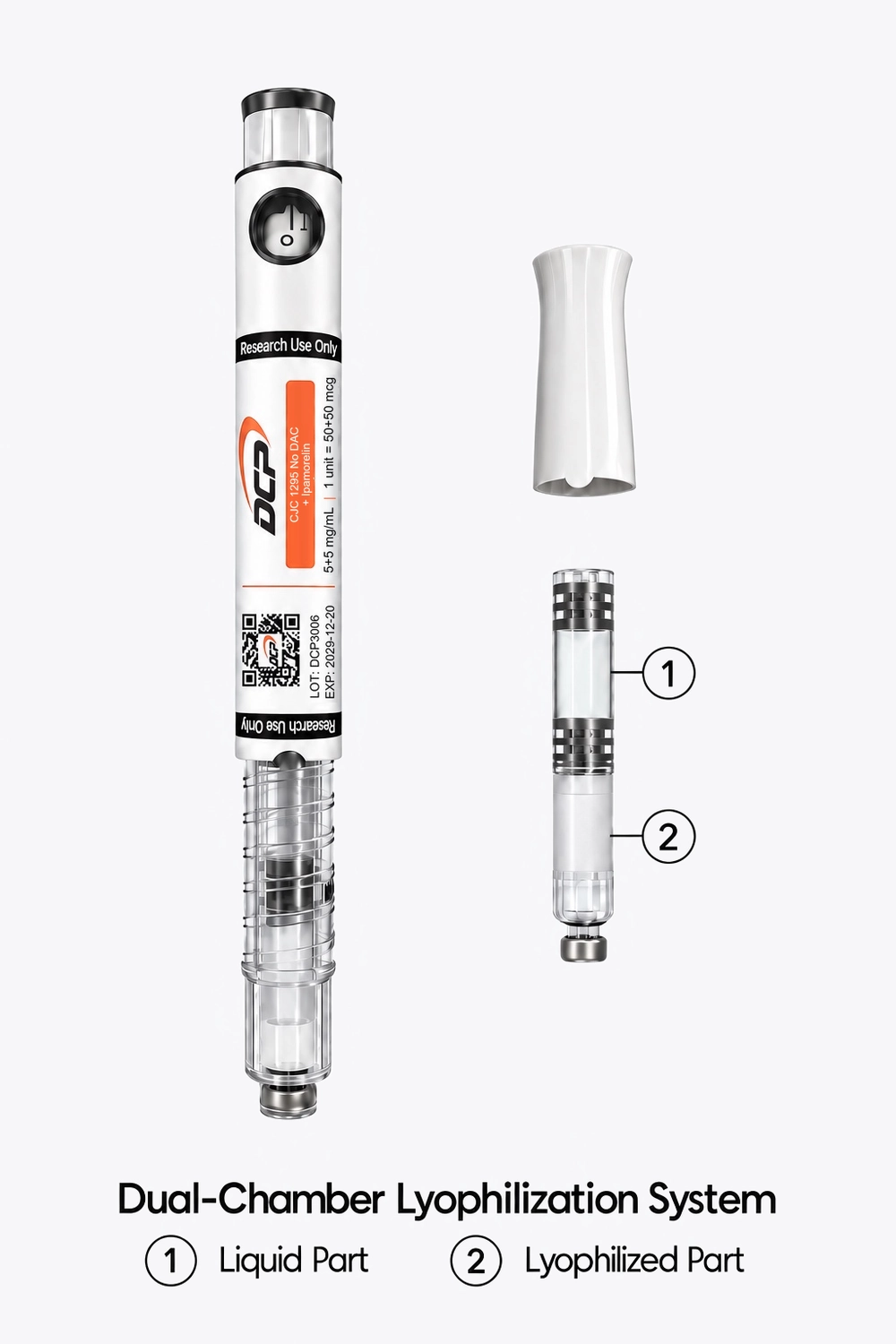
Formulation evidence would need to address both components under the intended conditions: their identities and contents, changes over time, degradation products and relevant interactions with the container. An apparently clear solution is not a chemical compatibility result. Keeping materials separate likewise does not demonstrate stability or clinical performance without measurements.
Analytical endpoints also need precise interpretation. Chromatographic area percentage depends on the method and the peaks detected. It is not interchangeable with the mass of each peptide, proof of identity, sterility or endotoxin testing. The distinction is developed further in the guide to peptide purity testing.
Keep the conclusion matched to the evidence
Individual pharmacology studies support statements about the exact compounds and interventions they examined. They do not validate a fixed blend, establish device equivalence or demonstrate a combination's benefit–risk profile. The FDA assessment of certain bulk substances used in compounding adds regulatory safety context, not proof that a delivery format resolves the identified concerns.
The useful sequence is identity, formulation, exposure and outcome. Evidence at one step helps define the next question; it does not allow the remaining steps to be skipped.
Explore the Products from This Article
All products are >99% purity, manufactured in a certified EU laboratory, with accompanying lab analysis.
Research Disclaimer
This article is for informational and research purposes only. The content is not intended as medical advice, diagnosis, or treatment recommendation.